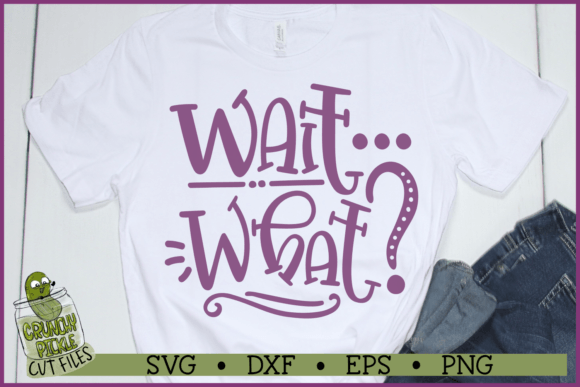
Wait What File: A Designer's Real-World Review
As a designer who spends countless hours translating digital concepts into tangible thread, I approach every new machine embroidery design with a critical eye. The market is flooded with generic patterns, but finding a Graphics asset that truly translates well from screen to stitch requires experience. Today, I am evaluating the Wait What File. While the product description highlights its utility as an SVG cutting file for vinyl on Cricut or Silhouette machines, my focus here is strictly on its potential as an embroidery project. Can this playful phrase survive the transition to needle and thread? Let's dig into the practical realities of using this design for your handmade product line.
First Impressions: Visual Weight and Mood
At first glance, the Wait What File exudes a casual, humorous energy that fits perfectly within the modern craft business aesthetic. The typography appears bold and straightforward, which is generally a positive indicator for embroidery. In the world of custom apparel, simple phrases often outperform complex illustrations because they are legible at a distance. The mood is lighthearted, making it an ideal candidate for personalized gifts or novelty items intended to spark conversation.
However, as a professional, I immediately start visualizing the stitch density. Bold lettering like "Wait What" relies heavily on fill stitch to create a solid, opaque look. If the design has thin serifs or overly tight kerning, it could become a nightmare when converting to an embroidery file. The visual personality suggests it belongs on relaxed fabrics rather than formal wear. It screams tote bag design or sweatshirt embroidery rather than a delicate handkerchief or a structured blazer lapel.
Real-Life Application: The Custom Tote Scenario
Let's imagine a real-world scenario where you are preparing a batch of canvas tote bags for an upcoming craft fair. You want to offer something witty that appeals to young adults and parents alike. You load the Wait What File into your digitizing software. The shape is clean, which is promising. When I think about how this would look after stitching on a sturdy cotton canvas, the contrast between the thread and the fabric becomes the deciding factor.
For a tote bag design, the durability of the stitch is paramount. These bags get tossed in cars, filled with groceries, and washed frequently. If the Wait What File is converted properly, using a dense fill stitch with a good underlay, it will hold up well. The humor adds value; customers aren't just buying a bag; they are buying a statement piece. This kind of finished product can significantly boost buyer engagement on platforms like Etsy. However, if the letters are too small, the thread colors might blend together, losing the punchiness required for the joke to land. Always test the scale before committing to a full production run.
Navigating Fabric Challenges and Hoop Sizes
One of the most critical aspects of reviewing any digital embroidery file is understanding its limitations regarding fabric texture and hoop size. The Wait What File, with its likely blocky lettering, demands a specific approach depending on the substrate.
- Textured Fabrics: If you attempt this design on a heavy fleece or a nubby linen, the running stitch details might get lost in the weave. The stitch density needs to be high enough to cover the texture without puckering the fabric.
- Stretchy Materials: For baby embroidery or stretchy jersey tees, the rigidity of the text could cause issues. You must use a cut-away stabilizer to prevent the letters from warping when the garment is worn.
- Small Hoops: While the phrase is short, fitting "Wait What" into a 4x4 inch hoop might force the font to be too tiny. Small lettering in embroidery is risky; threads can tangle, and the result looks muddy. Check the hoop size requirements carefully.
- Dark Fabrics: If you plan to use this on black denim or navy sweatshirts, ensure you have enough layers of white underlay or consider using a lighter applique design technique behind the text to make the colors pop.
Strategic Use for Small Business Owners
For the Etsy seller or small shop owner, the Wait What File offers versatility, but only if used strategically. It works exceptionally well as a commercial embroidery asset for seasonal collections. Imagine this phrase on a holiday apron or a funny kitchen towel during the Christmas rush. The simplicity allows for quick production times, which is essential for managing inventory during peak seasons.
However, do not overlook the importance of printable mockups when listing these items. Before selling the physical goods, create realistic images showing the design on different backgrounds. This builds customer trust and sets accurate expectations. If the design looks great on a white shirt but gets lost on a grey one, your mockups should reflect that nuance. Consistency in presentation elevates the perceived value of your design assets.
Practical Designer Notes for Success
To ensure your embroidery project succeeds with this file, follow these professional guidelines:
- Test on Scrap Fabric First: Never skip the test run. Stitch the Wait What File on a scrap piece of the exact fabric you intend to use. Check for pulling, skipping, or thread breaks.
- Review Thread Color Contrast: High contrast is key for readability. If the background is dark, avoid dark thread colors for the main fill.
- Confirm Licensing: Since the original product is described as an SVG cutting file, verify the licensing terms before selling finished embroidered items. Some digital licenses restrict commercial use unless upgraded.
- Inspect Small Details: Zoom in on the corners of the letters. Sharp angles can sometimes cause thread bunching in embroidery, even if they cut cleanly in vinyl.
- Use Proper Stabilizer: Do not skimp on stabilizers. A strong base is what turns a flat digital file into a durable, professional-looking finished product.
In conclusion, the Wait What File holds significant promise for the creative entrepreneur looking to add humor to their catalog. Its strength lies in its simplicity and broad appeal. Whether you are creating a custom apparel line, designing holiday embroidery gifts, or crafting unique embroidered patches, this design can serve as a reliable workhorse. Just remember that while it is marketed as a cutting file, its translation to thread requires careful digitization and testing. With the right preparation, it can become a bestseller in your shop, proving that sometimes the simplest designs make the biggest impact.