Bacon and Muffin Diet: A Designer's Review
As a designer who has spent years curating assets for small businesses and crafting personalized gifts, I approach every new download with a critical eye. The market is flooded with generic graphics, so finding a piece that balances humor, clarity, and stitchability is rare. When I first opened the Bacon and Muffin Diet file package, I was looking for more than just a cute image; I wanted a design asset that could translate seamlessly from a digital screen to a physical finished product. This review breaks down how this specific illustration performs in real-world embroidery scenarios, helping you decide if it belongs in your next project or shop inventory.
First Impressions: Visual Weight and Theme
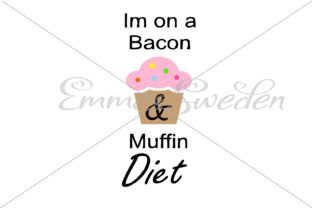
The concept behind the Bacon and Muffin Diet is inherently playful, tapping into the popular "what can I eat" aesthetic that resonates well with foodies and crafters alike. Visually, the design leans heavily on bold shapes rather than intricate, microscopic details. For an embroidery project, this is a significant advantage. In the world of machine embroidery design, less is often more when it comes to stitch definition. The layout suggests a balanced composition where the bacon strips and the muffin are distinct entities, preventing the common issue of elements merging into a muddy mass during stitching.
When viewing the preview images, the mood is lighthearted and inviting. It feels like a perfect candidate for kitchen-themed merchandise or humorous apparel. The color palette implied by the subject matter—warm browns, creamy whites, and savory reds—naturally lends itself to high-contrast thread colors. However, as a reviewer, my immediate thought is always about how these colors will render on different fabric textures. A design that looks crisp on a white cotton tote bag might struggle on a heather grey sweatshirt if the contrast isn't managed correctly.
Real-World Application: From Tote Bags to Patches
To truly evaluate the utility of the Bacon and Muffin Diet, I visualized several specific use cases. Imagine preparing a custom embroidered tote bag for a local craft fair. The open nature of the design makes it ideal for placement on the front panel of a canvas bag. Because the lines are relatively clean, the risk of puckering is lower compared to designs with excessive fill stitch density. This is crucial for items that need to remain flexible and durable after frequent washing.
Another strong application is creating an embroidered patch. If you run a small shop selling patches, this graphic offers a clear silhouette that holds up well even when backed with stiff felt or iron-on adhesive. The distinct separation between the bacon and the muffin ensures that the satin stitch outlines will define the edges sharply, giving the patch a professional look. For Etsy sellers, this kind of clarity translates directly to customer trust. Buyers want to see a finished product that looks intentional, not messy or pixelated.
I also considered using this for baby embroidery, perhaps on a bib or a onesie. While the theme is food-related, the whimsical style softens the message enough to be acceptable for nursery decor or children's wear, provided the stabilizer is chosen carefully to prevent stiffness against a baby's skin. The design also works exceptionally well for holiday embroidery projects, such as a Christmas apron or a Thanksgiving tea towel, adding a touch of seasonal humor to functional home goods.
Navigating Technical Challenges and Fabric Choices
Despite its strengths, there are scenarios where the Bacon and Muffin Diet requires careful handling. If you plan to use this on thin or stretchy fabric, such as a jersey t-shirt, the density of the fill stitches could cause distortion. Always test the design on scrap fabric first to gauge how much pull occurs. Using the proper stabilizer is non-negotiable here; a tear-away stabilizer might suffice for woven fabrics, but a cut-away stabilizer is essential for knits to maintain the shape of the muffin and bacon over time.
Curved surfaces present another challenge. Attempting to embroider this design on a baseball cap requires precise registration. The rounded top of the muffin and the jagged edges of the bacon strips must align perfectly with the cap's curvature. If the hoop size is too small, you risk cutting off vital parts of the illustration, ruining the visual balance. Conversely, if the hoop is too large for the design area, the excess tension can warp the fabric. Always confirm the recommended hoop size before starting any commercial embroidery project.
Dark fabrics demand a different strategy. While the design files include vector formats like SVG and DXF which allow for easy manipulation, the default color scheme might get lost on black or navy backgrounds. You may need to adjust the thread colors or add a layer of underlay to ensure the lighter tones of the muffin pop against the dark material. Additionally, tiny lettering, if included in your final mockup alongside the graphic, should be avoided or kept minimal, as fine text often becomes illegible once stitched.
File Formats and Digital Workflow
The versatility of the Bacon and Muffin Diet package is one of its strongest selling points. The inclusion of multiple formats—PNG, PDF, SVG, DXF, and JPG—caters to a wide range of workflows. For those creating printable mockups to showcase their handmade products online, the high-resolution PNG and JPG files provide excellent clarity for digital previews. These are essential for building buyer engagement on platforms like Etsy or Instagram, allowing customers to visualize the design before purchasing.
For makers who utilize laser cutters or vinyl plotters alongside their embroidery machines, the SVG and DXF files offer immense value. You could create a layered applique design where the background is cut from fabric and the top layers are embroidered, adding texture and depth to the final piece. This hybrid approach elevates the perceived value of the product, moving it from a simple decoration to a premium handmade item. However, remember to check the licensing terms regarding these digital assets. While the files are versatile, ensuring you have the right to sell finished items or redistribute the graphics is a critical step for any creative entrepreneur.
Final Verdict for Designers and Makers
In conclusion, the Bacon and Muffin Diet is a robust addition to any library of design assets. Its strength lies in its simplicity and thematic appeal, making it a reliable choice for custom apparel, home decor, and boutique branding. It avoids the trap of over-complication, ensuring that the stitching remains clean and the visual impact is strong. Whether you are a hobbyist looking to make a funny gift for a friend or a business owner scaling your product line, this graphic offers a solid foundation.
My advice is to treat this design as a flexible tool. Test it on various materials, experiment with thread colors to match your brand identity, and always prioritize the structural integrity of the fabric. By paying attention to stitch density, stabilizer choice, and hoop placement, you can transform this digital illustration into a high-quality, tangible product that customers will love. It is a reminder that the best embroidery designs are not just about the image, but about how well they integrate into the physical world we live in.